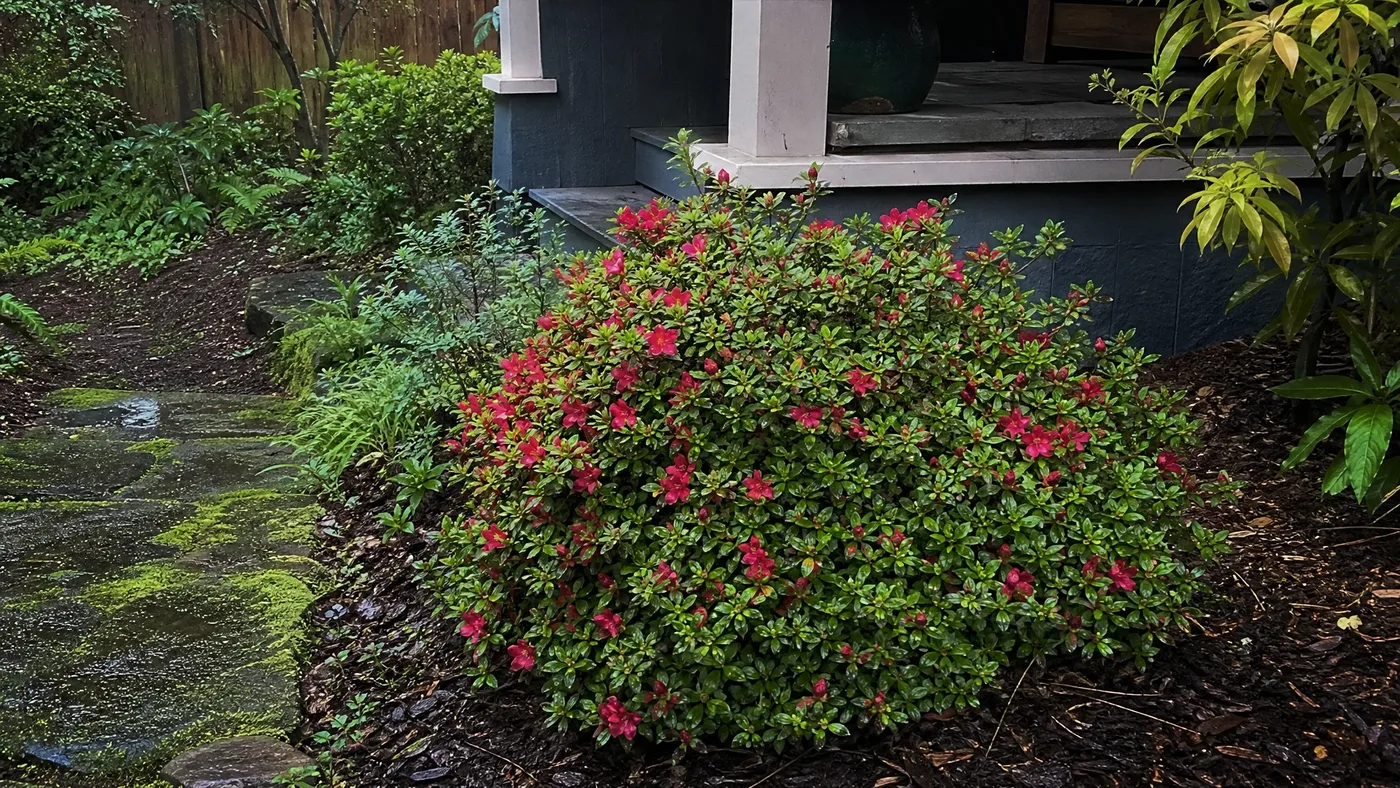
Hino Crimson Kurume Azalea's Spring and Summer Leaves Explained
You walk out in October and find the big, soft green leaves on your Hino Crimson turning yellow and dropping. It is an evergreen azalea, so your first thought is that something has gone badly wrong. In fact, the plant is doing what Kurume hybrids do: it grows two different sets of leaves each year and retires one of them in fall. So what was it actually doing out there?
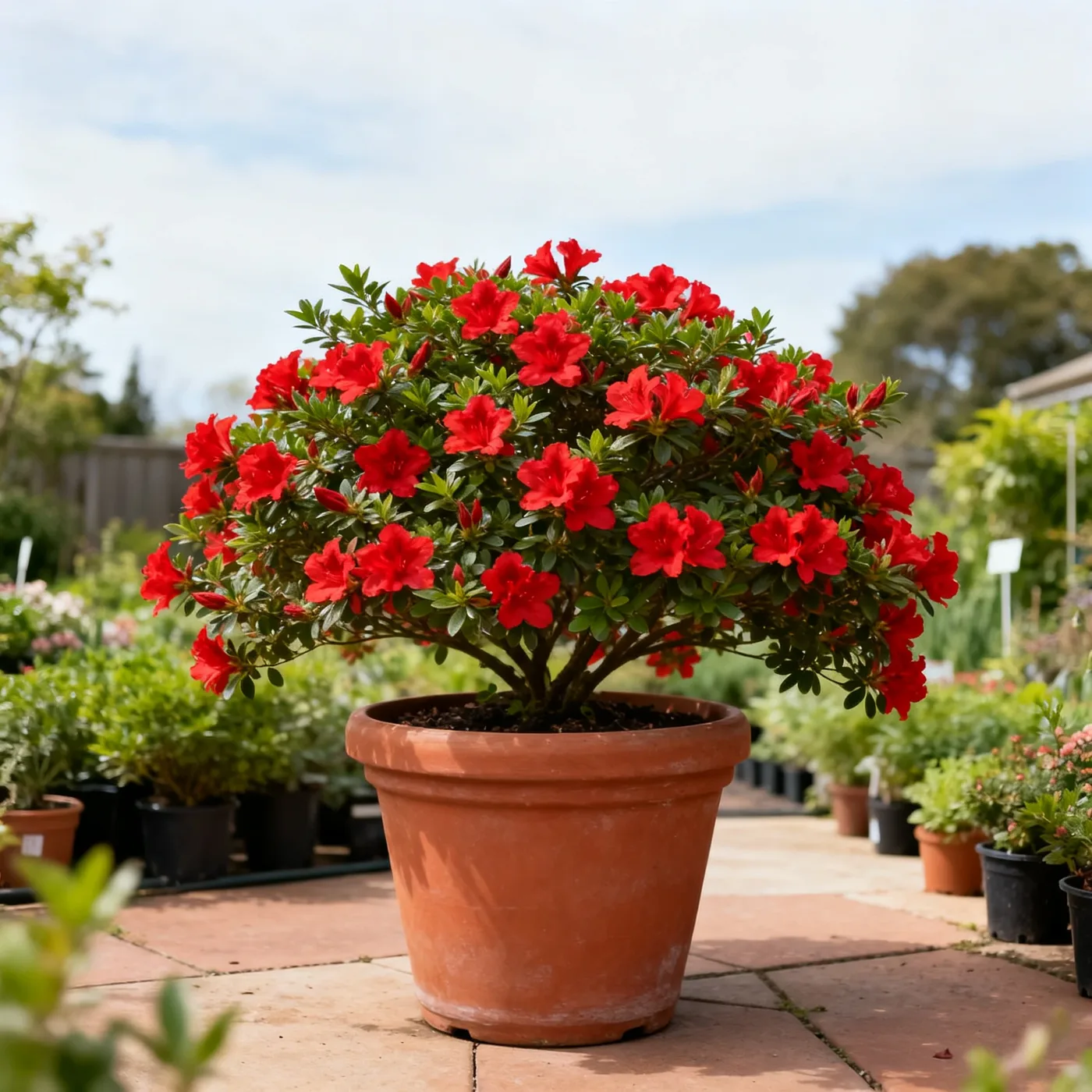
Mistaking this habit for decline leads owners to overwater, overfeed or even dig up a healthy shrub. Understanding it lets you relax in October and still catch real trouble in July. We'll walk you through the two leaf types and the growth habit behind them, then why the spring leaves drop and how the summer leaves carry the plant through winter, and finally how to tell normal drop from trouble and what to do in each leaf season.
Two Leaf Types on Hino Crimson Kurume Azalea
Look at one branch of a Hino Crimson in midsummer and you will find two kinds of leaves on the same stem. Lower down are larger, thinner, softer leaves. Out at the tips, and tucked in beside the buds, are smaller, firmer, glossier ones. Most people never notice, because the two sets overlap for months. The difference is real, though, and it explains the fall drop.
Hino Crimson is a Kurume hybrid, a group known for low, dense, tiered branching. It is smaller and lower growing than 'Hinode Giri', and that tight habit matters here. With so many short twigs packed together, any change in the leaves shows on the surface of the plant almost at once. Growth comes in two pushes, one in spring and a second in early summer, and each push makes its own kind of leaf.
This two-leaf habit belongs to the Kurume class. Southern Indica and Encore azaleas grow one continuous set of leaves instead, which is why advice written for those plants can mislead you here. If a neighbor's azalea holds every leaf through fall and yours does not, they are probably not the same type of azalea.
What Dimorphic Foliage Means in Plain Terms
Cut a stem in July and lay one large leaf beside one small leaf. That pair shows the whole idea in a glance. The vocabulary gardeners use for it is simple once you separate the terms.
Dimorphic means "two forms." A dimorphic plant makes two distinct versions of the same part, here the leaf, and it does so on a regular schedule rather than by accident. Nothing is wrong with a plant that does this. It is simply how the plant is built.
Spring flush is the first burst of new growth, arriving around and just after bloom. Flowering is given as mid to late spring, but that is a UK climate, so follow your own flowers rather than the calendar. The leaves in this flush are large and thin.
Persistent leaf is a leaf that stays on through winter instead of falling. On Hino Crimson, the smaller summer leaves are the persistent ones.
Here is the one analogy we find useful. Think of a shop that hires extra seasonal staff for the busy months and keeps a smaller permanent crew all year. Spring leaves are the seasonal staff: many hands, fast work, gone when business slows. Summer leaves are the permanent crew. Nobody calls it a crisis when the seasonal staff go home, and the shrub is never bare, because the crew is always on the branch.
Why Spring Leaves Drop Before Fall
In late September a customer sends us a photo: yellow leaves scattered under the shrub, and the branches above still clothed in smaller green ones. That photo shows the process finishing correctly. The plant is not losing its foliage. It is handing over from one set to the other.
Spring leaves are built for speed. Their large, thin blades catch light and make sugar fast during the mild, moist weeks of spring. The tradeoff is that a big thin leaf also loses water quickly and tears or freezes easily. Keeping it through winter would cost the plant more than the leaf could ever return.
As nights cool, the plant takes back what it can. The green pigment breaks down first, which is why the leaf turns yellow, and sometimes orange or red, before it lets go. Stored sugars and nutrients move back into the stem. By the time the leaf falls, it is mostly spent, and the plant has already banked what it needs for the next flush.
Which leaves go is fairly predictable. The larger, older leaves on the inner and lower stems usually drop first, while the small leaves at the tips stay put. How many fall varies with the year and your climate, so a heavier drop after a hot summer is not alarming by itself. What matters is the pattern, not the count.
Persistent Leaves Carry Hino Crimson Kurume Azalea Through the Cold
Pick off one of the small leaves in January and bend it. It feels stiffer than the spring leaves did, and its glossy surface sheds water. The foliage is small, glossy green and turns bronze in winter, and the leaves are also small, mid-green and evergreen. Both descriptions fit the set still on the plant when winter arrives.
The design suits the job. A small leaf offers less surface for winter wind to dry out. A firm, glossy leaf slows water loss further. These leaves can keep working on mild winter days, and they cover the stem tips and buds that carry next spring's growth. That covering is why we call them the permanent crew.
Bronze is not damage. Cold brings out the color, and the leaf usually returns to green as spring warms. The test is texture: bronze leaves stay firm and attached, while the yellow spring leaves of fall go soft and drop. Our guide to winter care and cold protection for Hino Crimson covers what to do near the cold edge of its range.
Because these leaves carry the plant through winter, protect them in late summer. Hard pruning or a long drought at that stage strips the cover the shrub depends on, and a plant that enters winter with few small leaves will look rough by spring.
Telling Normal Leaf Drop From Trouble
One of the most common questions we get each fall is whether yellow leaves mean the plant is dying. The answer depends on which leaves are yellow and what else is happening on the plant. Check the shrub in good light, then compare it with the table below before you do anything.
| What you see | Normal seasonal drop | Possible trouble |
|---|---|---|
| Which leaves | Larger, older leaves on inner and lower stems | Small tip leaves, or leaves all over the plant |
| Timing | Gradual, starting as nights cool | Sudden, or starting in summer |
| Color change | Even yellow, orange or red | Spots, dark patches, or yellow between green veins |
| Twigs and buds | Firm twigs, plump buds | Brittle, dry twigs, shriveled buds |
| Leaf undersides | Clean | Pale stippling, sticky residue or specks |
When the Drop Points to Trouble
Start with the small leaves. If the persistent set is yellowing, browning or falling, the cause is not the seasonal handover. Look at the roots first. Azaleas have fine, shallow roots that suffer in soggy or bone-dry soil, and root trouble shows up in the leaves before anything else.
Yellow between green veins on new and old leaves alike usually points to soil that is not acidic enough, which is a different problem from seasonal drop. Stippled or sticky undersides suggest a sap-feeding pest. Browned small leaves after a cold snap suggest winter injury. The plant is hardy only to Zone 7. At the colder end, expect more winter injury. Our guide to common Hino Crimson problems goes through each cause.
A Quick Check Before You Act
Scratch a twig lightly with a fingernail. Green under the bark means the stem is alive, so wait before you cut anything. Then count the small leaves at the tips. If they are firm and green while the big ones fall, leave the plant alone and keep watering as usual. Keep pets from chewing fallen leaves, since azalea is toxic to dogs and cats.
Caring for Hino Crimson Kurume Azalea by Leaf Season
Every task is easier when you ask which leaf set it helps. Spring leaves need a good start and can then go. Summer leaves need protection because they carry the plant through winter. In every season the soil stays the same: moist but well-drained, leafy, humus-rich acid soil.
Feed and Prune While the Big Leaves Expand
Feed lightly once the flowers fade, as the big new leaves expand. Our fertilizing guide for Hino Crimson covers timing and products. Prune soon after bloom if you need to shape the plant, and make the cuts early so you do not remove the small summer leaves as they form. See when and how to prune Hino Crimson for the cuts themselves.
Keep the Small Leaves Moist and Mulched
Keep the soil evenly moist through the second growth push, because small leaves that form under drought stay thin and lose their gloss. Mulch with pine bark or leaf mold to hold moisture around the shallow roots. Our guide to watering Hino Crimson the right way explains how to judge when the root zone is dry.
Do Less While the Big Leaves Fall
Autumn is the time for doing less. Work through these steps when the big leaves begin to turn:
- Confirm that the leaves dropping are the larger, older ones.
- Check that the small tip leaves are firm and green.
- Water during dry autumn spells until the ground freezes.
- Skip fertilizer and pruning, which push growth the plant cannot finish.
- Rake up and discard any fallen leaves with spots. Plain yellow ones can stay as mulch.
Hino Crimson Kurume Azalea Foliage in One Year
In our rows, the plants that worry customers most are the ones that look thinnest in late fall, and they are usually the healthiest. A year of foliage on this azalea is a relay, and it helps to see the whole run at once.
Flowers and the Big New Leaves
Flowers open in mid to late spring, on a shrub still wearing the bronze or greening small leaves from winter. As the flowers fade, the big spring leaves unfold. The plant looks fullest now. The canopy is mostly seasonal staff, and it will not stay that way.
The Small Leaves Take Shape
The second push of growth arrives in early summer, and the small, glossy leaves form at the tips. For a while both sets share the stems. This is when drought, pests and hard pruning do the most harm, because you are watching the permanent crew being hired.
Big Leaves Fall and Small Ones Bronze
As nights cool, the large leaves yellow and fall from the inside out. The small leaves remain, and cold turns them bronze. Through the cold months the plant is smaller-leaved, darker and tidier, and it stays that way until the next spring flush replaces the cycle.
Reading Hino Crimson Kurume Azalea Leaves With Confidence
The takeaway is that two leaf types make two jobs. Big spring leaves are seasonal and are meant to drop in fall. Small summer leaves are the permanent set, and they are the ones to protect and to judge the plant by.
Here is the month-by-month sketch, shifted a few weeks for your climate. April and May: flowers open and bronze leaves green up. May and June: big new leaves expand. July and August: small, firm leaves form at the tips. September and October: big leaves yellow and fall. November to February: small leaves hold, bronze and firm. March: the bronze fades. If your plant follows this, relax.
Hino Crimson Kurume Azalea
Nursery-grown Hino Crimson Kurume Azalea in sizes from 3 Gallon, shipped to your door.
From $79.95
Shop Now →Hino Crimson spends its early life in our beds of leafy, acid soil that holds moisture yet drains quickly, with light from half sun up to a full day of it. Every top-quality shrub we sell comes from those same farms, so we know how its big spring leaves and small summer leaves behave. Once you can read them, start with one of our plants and watch the seasons unfold.