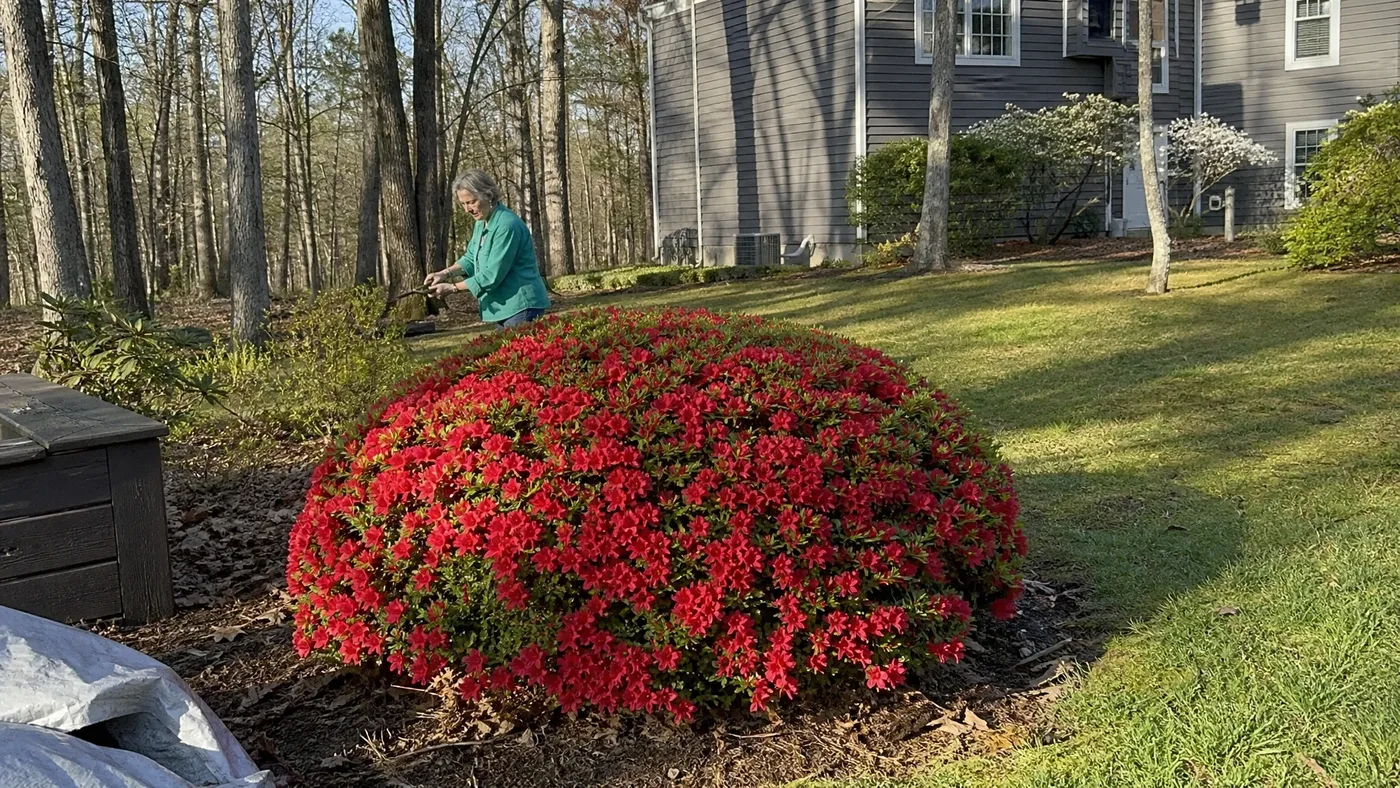
Twig Blight on Hino Crimson Kurume Azalea: Spot It and Treat It
In midsummer one branch tip on your Hino Crimson has gone limp. Its small glossy leaves are curled and dull, and every other branch looks fine. More water won't fix it, and neither will fertilizer. The puzzle is what the shrub let in, because every pruning cut, split and nick in the bark is a door, and fungi that live on dead wood in woodland litter are good at finding open doors.
This is twig blight, the fungal dieback the National Park Service calls rhododendron dieback, and azaleas get it too. Caught at a single branch, it is a small repair job. Missed, it can travel into the main stems.
Below, you'll find out all about spotting and treating twig blight, including how to read one-sided wilting, what the bark shows when you scratch it, how dieback direction separates canker from root trouble, where infection starts, and how to cut it out.
Wilted Leaves on One Branch Only
One of the most common questions we get is why a single branch wilts while the rest of the shrub looks happy. That pattern is your first clue. Anything that affects the whole plant, such as drought, soggy roots or a bad soil pH, shows up everywhere at once. A problem confined to one branch is almost always a problem inside that branch.
Rule Out the Whole Plant First
Before you suspect a fungus, spend two minutes eliminating the usual suspects. Work through these checks in order:
- Push a finger into the soil beside the root ball. If it is bone dry or soaking wet in several places around the shrub, the cause is watering, and our watering guide covers the fix.
- Look at the whole canopy. Yellowing, drooping and leaf drop spread across many branches point to roots, and our problems guide covers root rot and petal blight, which this guide does not.
- Check the date. Hino Crimson leaves turn bronze in winter, a normal trait for this cultivar, so bronzing across the whole plant in cold months is not disease.
- Check the damaged branch for a wound, a rubbed spot or an old pruning stub somewhere below the wilted tip.
If the soil is evenly moist, the roots feel firm and only one branch is failing, move on to the bark.
What the Leaves Tell You
Blighted leaves wilt suddenly, curl, lose their gloss and then turn brown. They often hang on the twig instead of dropping, which gives the dead branch a scorched look against the green around it. That hanging brown foliage is a useful tell.
Brown Streaks Under the Bark of Hino Crimson Kurume Azalea
The wilted leaves are the symptom. The cause is under the bark. The Park Service describes the dieback fungus, Botryosphaeria dothidea, as producing reddish brown discoloration on the underside of the infected branches, followed by sudden leaf wilting and eventual foliage death.
Take a clean pocketknife or a thumbnail and scrape a sliver of bark from the wilted branch, starting a little below the dead leaves. Healthy stems are pale green and moist just under the surface. An infected stem is reddish brown or tan and dry. Scrape a healthy branch nearby for comparison, so you know what normal looks like on your own plant.
Hino Crimson has thin, wiry twigs, so scrape lightly and only on the side of the stem. You are looking, not carving.
Here is why one branch wilts fast. The fungus colonizes the wood beneath the bark, and everything beyond that point loses its water supply. The leaves on that branch are fine until the supply stops, which is why the wilting looks sudden. Keep scraping downward in short steps until the color turns green again. That boundary tells you how far the fungus has traveled, and you will need it when you cut.
Dieback Starting at the Tip or the Base?
Direction matters. Canker dieback and root trouble can both leave you with dead branches, but they travel in opposite directions, and the right treatment for one is the wrong one for the other.
Canker kills from a wound outward. The dead zone begins at the point of infection and everything beyond it dies, so the browning often seems to start at a branch tip, a side shoot or a junction partway along. Root problems work the other way. The whole plant declines from the base up, usually with several branches affected and the soil telling its own story. This table sets the two side by side.
| What you see | Points to | Next check |
|---|---|---|
| One branch dead, others green, brown streak under bark | Twig blight canker | Look for a wound or stub below the dead part |
| Several branches fading from the inside, soggy soil | Root rot | Check drainage and the roots themselves |
| Dry brown tips across the whole shrub after a dry spell | Drought stress | Water deeply and reassess in a week |
| Dead twigs on the north or windward side after winter | Cold damage | Scrape for green wood, then wait for new growth |
One more reason to take the early signs seriously: the Park Service also notes the disease is more fatal to older or drought-damaged plants. A shrub that is already short of water has less to defend itself with.
How Fungus Finds Wounds on Hino Crimson Kurume Azalea
In the wild, this fungus is mostly a problem for plants that are already struggling. On the Blue Ridge Parkway, the rosebay rhododendron is hit hardest, but the Park Service says other rhododendrons and azaleas are affected too. A woodland shrub stressed by drought or cold develops cracks and dead twigs, and spores that were already in the leaf litter move in. Your garden shrub follows the same script, just with more wounds that people made.
Pruning Cuts and Stubs
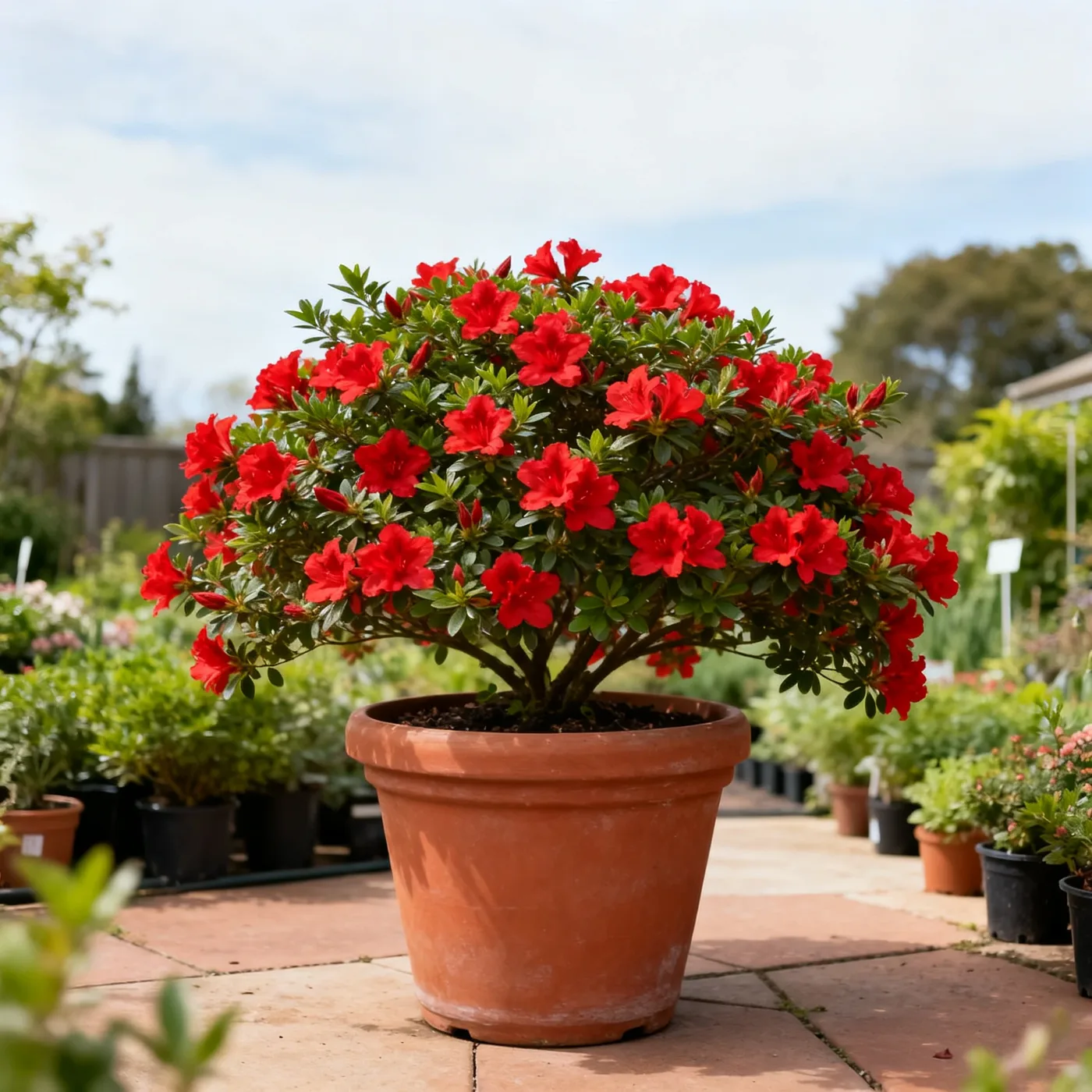
Hino Crimson grows as a low, compact shrub with flat-tiered, twiggy branching, which is why we recommend light, frequent shaping. The side effect is plenty of small junctions and fresh cut surfaces. A stub left above a bud dies back and gives the fungus a dead-wood foothold. Cut back to just above a bud or branch junction, and see when and how to prune for timing. Prune on a dry day, so cuts are not sitting wet.
Frost Cracks and Trimmer Damage
Winter can split bark on exposed stems. The cultivar is hardy to USDA Zone 7, and it is also grown in Zone 5, so in colder sites a split stem is a real risk. Our winter protection guide covers how to reduce it.
Low shrubs also sit at string-trimmer and mower height. A scraped stem at ground level is an open wound you may never notice. Keep a mulch ring wide enough that no tool has to get close.
Tiny Black Dots and Sunken Cankers
Once the discoloration is under the bark, look at the outside of the dead stem for confirmation. Two features usually show up on the dead portion.
The first is a canker, a patch of bark that looks sunken, flattened or darker than the bark above and below it. It may crack along the edges where living tissue is trying to wall off the dead area. Run a finger over it. A canker feels slightly dipped, as if the stem has been pinched.
The second is a scatter of tiny black dots, often in rows, on the dead bark. These are the fungus's fruiting bodies, the structures that release the next round of spores. A hand lens makes them easy to see. They tend to appear on stems that have been dead for a while, so a fresh infection may not show them yet. Their absence does not clear the plant. Their presence confirms it.
If you see them, treat the dead branch as a source of reinfection. Leaving it in place, or snipping it and dropping it under the shrub, hands the fungus a fresh round of spores. Remove it, and handle the pieces with the care described in the next section.
Cutting Out Dead Wood and Saving Hino Crimson Kurume Azalea
There is no spray that restores a cankered branch. The treatment is surgical, and the plant will recover if you cut well below the dead tissue and keep your own tools from spreading the disease. We tell customers to treat it like removing a splinter: get all of it, in one go.
Make the Cut
Work on a dry day. Follow these steps, in order:
- Wipe your pruners with rubbing alcohol or a disinfectant labeled for garden tools before the first cut.
- Scrape the bark down the stem until you find where the tissue turns green and moist again.
- Cut at a junction or just above a bud, well below that point, in wood that is clean all the way across.
- Look at the cut face. Any brown or tan means the fungus is still in there, so cut again lower down.
- Disinfect the blades after every cut on diseased wood, not just at the end.
- Bag every piece of cut wood and every fallen leaf from under the shrub, and remove them from the property.
We skip wound paint. Clean cuts on a healthy azalea close without it, and a sealed-in film can hold moisture against the wound.
Clean Up and Support the Plant
Do not compost the debris, because a backyard pile rarely does enough to kill the fungus. After cutting, water the root zone if the soil is dry, since the Park Service ties severe cases to drought stress. Hold off on heavy feeding while the plant recovers. Our care guide covers the routine to return to once the shrub is steady.
Hino Crimson Kurume Azalea Healing Through the Seasons
Recovery is slower than the damage was. The wilting happened in days. Rebuilding takes the rest of the growing season and often a second one.
The First Few Weeks
Below the cut, dormant buds along the stem begin to swell. This shrub branches so densely that there are usually several good buds close to any cut. The new growth is small and light green at first, then darkens to the cultivar's mid-green foliage. If the cut edge stays clean and a callus ring forms around it, the wound is sealing.
The Following Spring
The shrub blooms in mid to late spring, and the repaired side may carry fewer flowers in the first year, since it is regrowing wood rather than setting buds. That is normal. Expect the gap to fill in as the new branches thicken. The plant prefers moist but well-drained, leafy, humus-rich acid soil, and keeping that soil steady in the weeks after pruning is the best thing you can do for it.
Watch the stem you cut. A new brown streak or wilting shoot on the same branch means some fungus remained, so cut lower again. If the infection reaches the main stems near the base, cutting out one branch will not be enough, and it is time to consider replacing the plant. Our planting guide covers a better start for the replacement.
Keeping Hino Crimson Kurume Azalea Clean After Every Cut
Twig blight is a wound disease, so the habits that prevent it are simple: make clean cuts at junctions, never leave stubs, keep trimmers away from the stems, water through dry spells, and look under the bark the day you notice one-sided wilting. The plant will usually show you what it needs, and you can tell it has sealed the wound when the first new green buds break from the pruned cut below the old canker.
Hino Crimson Kurume Azalea
Nursery-grown Hino Crimson Kurume Azalea in sizes from 3 Gallon, shipped to your door.
From $79.95
Shop Now →On our farms, Hino Crimson gets a bed of acidic, humus-rich soil that stays damp without ever sitting wet, and that is the footing behind the plants we send out. We grow and sell top-quality shrubs from those farms, so if canker has cost you a branch or a whole plant, begin again with one of ours and keep it clean from the first cut.